
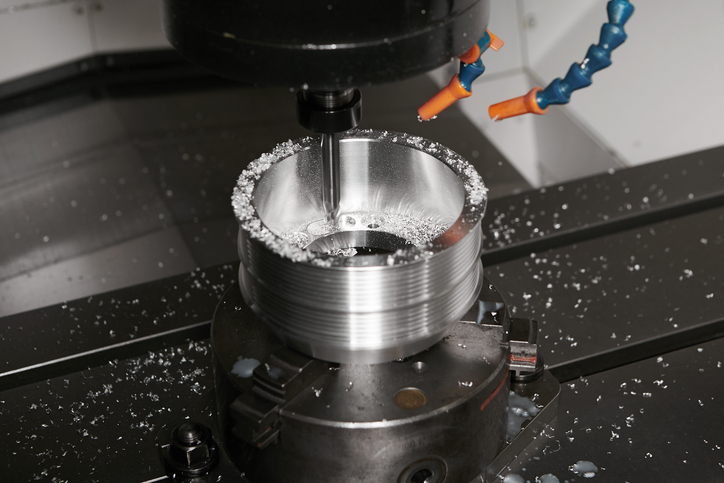
In today’s competitive manufacturing environment, speed and accuracy are critical to bringing new products to market. Businesses often face challenges when developing prototypes, particularly when cost, flexibility, and time are key considerations. Low volume CNC machining has emerged as a highly effective solution to these challenges, offering precision, efficiency, and adaptability that traditional manufacturing methods often struggle to match.
Understanding Low Volume CNC Machining
Low volume CNC machining refers to the production of small batches of parts using computer numerical control (CNC) machines. Unlike mass production, which focuses on large-scale output, low volume CNC machining emphasizes quality, accuracy, and quick turnaround for limited quantities. This approach is particularly beneficial for prototyping, where the objective is to test designs and make iterative improvements without committing to full-scale production.
The CNC process utilizes computer-controlled machines to shape materials with extreme precision. Metals, plastics, and composites can all be processed, making it versatile for a wide range of product designs. By automating the cutting, drilling, and milling processes, low volume CNC machining ensures consistent quality across multiple iterations of a prototype.
Faster Design Iterations
One of the primary advantages of low volume CNC machining in product prototyping is its ability to accelerate design iterations. Traditional manufacturing methods, such as injection molding, often require expensive molds and long setup times. In contrast, CNC machining allows engineers and designers to create functional prototypes quickly without the need for tooling.
This speed is crucial during the product development phase. Designers can test multiple variations of a component, evaluate performance, and make adjustments almost in real-time. The result is a more refined final product, with fewer errors and better alignment with customer expectations.
Cost Efficiency for Small Batches
Cost is always a concern in product development. Large-scale manufacturing methods can be prohibitively expensive for prototypes because of the initial tooling and setup costs. Low volume CNC machining eliminates much of this overhead. Since the process does not rely on custom molds or extensive tooling, producing small quantities becomes economically viable.
By reducing upfront costs, companies can allocate resources to other critical areas such as research, testing, and marketing. Additionally, low volume CNC machining allows businesses to validate designs and assess market interest before committing to mass production, minimizing the financial risk associated with launching a new product.
High Precision and Accuracy
Accuracy is non-negotiable in prototyping. Even minor deviations in dimensions or material properties can affect the performance of a product. Low volume CNC machining offers a level of precision that is difficult to achieve with manual processes. Computer-controlled machining ensures that each component meets exact specifications, reducing the likelihood of defects and rework.
This precision is especially valuable when prototyping complex geometries or parts that require tight tolerances. Engineers can test functional aspects of a design, such as fit, alignment, and mechanical performance, with confidence that the prototype accurately represents the intended final product.
Material Versatility
Prototyping often requires experimentation with different materials to identify the best combination for functionality, cost, and aesthetics. Low volume CNC machining supports a wide variety of materials, including aluminum, stainless steel, titanium, ABS, and polycarbonate. This flexibility allows designers to test products in realistic conditions, ensuring that the chosen materials will perform as expected in the final application.
Material versatility also enables rapid adjustments. If a particular material does not meet requirements, it can be swapped out without significant delays, allowing for continuous improvement throughout the prototyping phase.
Enhancing Customization
In many industries, products need to meet specific customer requirements or regulatory standards. Low volume CNC machining allows for high levels of customization that are not feasible with mass production. Each prototype can be tailored to include unique features, special dimensions, or intricate details that are critical for testing and validation.
This capability is particularly important in industries like aerospace, medical devices, and automotive, where precision, safety, and regulatory compliance are essential. Companies can use low volume CNC machining to produce functional prototypes that closely mimic the final product, enabling thorough evaluation before scaling up production.
Reducing Time to Market
Speed is a decisive factor in product development. The faster a company can move from concept to prototype to final product, the more competitive it becomes. Low volume CNC machining contributes significantly to reducing time to market. By enabling rapid production of high-quality prototypes, this method shortens development cycles and accelerates decision-making.
With faster turnaround times, companies can respond to market trends, customer feedback, and design challenges more efficiently. The ability to iterate quickly ensures that products are not only launched sooner but also meet higher quality and performance standards.
Facilitating Risk Mitigation
Prototyping inherently carries risks, from design flaws to material failures. Low volume CNC machining helps mitigate these risks by providing accurate, functional prototypes that can be tested under real-world conditions. Early detection of design issues allows engineers to make necessary adjustments before committing to mass production, reducing the likelihood of costly recalls or product failures.
Moreover, small-batch production means that any errors affect fewer parts, minimizing waste and financial loss. This risk mitigation makes low volume CNC machining a practical choice for companies looking to balance innovation with safety and reliability.
Supporting Iterative Innovation
Innovation thrives on experimentation and iteration. Low volume CNC machining aligns perfectly with this philosophy. Designers and engineers can explore multiple concepts, test new ideas, and refine prototypes without being constrained by high production costs or long lead times.
The iterative nature of prototyping with CNC machining encourages creative problem-solving and continuous improvement. By providing accurate, flexible, and cost-effective solutions, low volume CNC machining empowers teams to push the boundaries of design and functionality.
Conclusion
Low volume CNC machining has transformed the landscape of product prototyping. By combining precision, flexibility, and efficiency, it allows businesses to develop prototypes faster, reduce costs, and improve product quality. Its ability to support rapid design iterations, handle a wide range of materials, and deliver highly customized parts makes it an indispensable tool in modern manufacturing.
For companies aiming to innovate and compete effectively, adopting low volume CNC machining is more than a technical choice—it is a strategic advantage. By enabling faster, safer, and more cost-effective prototyping, it accelerates the journey from concept to market-ready product, ensuring that designs meet expectations and perform reliably in real-world applications.
Low volume CNC machining is not just a method; it is a catalyst for innovation, helping businesses bring high-quality, well-tested products to market faster and with greater confidence.