
1. Characteristic Analysis of HPMC in Concrete and Mortar
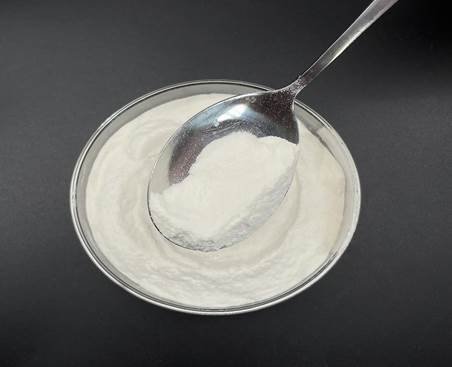
Hydroxypropyl Methylcellulose (HPMC) is widely used as a multifunctional additive in cement-based materials. It can modify water retention, rheology, workability, adhesion, and resistance to segregation. These characteristics make HPMC valuable in applications ranging from tile adhesives and plastering mortars to specialty concrete and 3D-printing materials. However, its benefits can also introduce challenges, particularly concerning strength, air entrainment, and fluidity.
1.1 Core Advantages of HPMC: A Multifunctional Additive
1.1.1 Excellent Water-Retention Performance
Water retention is one of the most important functions of HPMC. Cement hydration requires sufficient water, while dry substrates such as masonry, concrete blocks, and wall surfaces can rapidly draw water from fresh mortar through capillary action. If too much water is lost before hydration progresses adequately, the cementitious matrix may develop poor bonding, shrinkage, and cracking.
When HPMC dissolves in water, it contributes to the formation of a viscous polymeric environment around cement and other solid particles. This environment can slow water migration and evaporation, helping maintain moisture within the mortar for a longer period. As a result, cement hydration can proceed more effectively, while workability and adhesion are improved.
This characteristic is particularly useful in thin-bed mortars, tile adhesives, rendering systems, and other applications where rapid water loss could negatively affect performance.
1.1.2 Precise Control of Rheological Properties
HPMC is also an effective thickening and rheology-modifying agent. Even relatively small additions can substantially increase the viscosity of cement paste or mortar. This creates smoother handling and can improve the consistency of the fresh mixture.
Another important benefit is improved anti-sagging performance. When tile adhesive or mortar is applied to a vertical surface, gravity can cause the material to slide downward before it develops sufficient structural stability. HPMC increases the mixture’s yield stress and cohesion, helping the material remain where it is applied.
The result is better application control, improved open-time behavior, and greater convenience for construction workers.
1.1.3 Thermal Gelation Advantage
HPMC has a distinctive thermal behavior. Depending on its grade and formulation, it dissolves in water and can undergo thermal gelation when heated to a characteristic temperature range.
Cement hydration is an exothermic process, meaning that heat is released as hydration progresses. The thermal response of HPMC can therefore contribute to changes in the internal structure of fresh and hardening mortar. This behavior can help support shape retention and rheological stability during certain stages of setting and hardening.
The precise effect depends on HPMC grade, dosage, cement chemistry, temperature, and the overall formulation.
1.1.4 Anti-Washout Performance
HPMC can also be useful in underwater cementitious materials where resistance to washout is important. Fresh cement-based mixtures exposed to flowing water may experience particle dispersion and loss of binder.
The viscosity-enhancing and cohesion-promoting effects of HPMC can help reduce segregation and washout. This makes HPMC an attractive component in underwater non-dispersible concrete and other specialized cementitious systems.
1.2 Inherent Disadvantages of HPMC
Although HPMC provides important benefits, excessive or poorly optimized use can create disadvantages. The most important consideration is the potential reduction in hardened mechanical strength.
1.2.1 Potential Strength Reduction
HPMC can negatively affect compressive and flexural strength when its dosage and compatibility with the cement system are not properly optimized. One reason is that its air-entraining effect may introduce additional pores into the hardened matrix.
Greater porosity generally means lower density and a less continuous load-bearing structure. Consequently, increasing HPMC dosage beyond an appropriate level can result in a noticeable decline in mechanical performance.
This challenge becomes particularly important in applications where high early strength, high compressive strength, or high dimensional stability is required.
1.2.2 Mechanisms Behind Strength Loss
The strength-related disadvantages of HPMC are generally associated with several interacting mechanisms.
First, HPMC can promote air entrainment. Entrapped or stabilized air voids remain within the hardened cement matrix and increase porosity.
Second, HPMC can influence cement hydration and setting behavior. Depending on the cement composition and polymer characteristics, excessive HPMC may delay certain hydration processes, slowing early strength development.
Third, increased viscosity can make mixing, dispersion, and consolidation more difficult if the formulation is not properly designed. These factors can contribute to a less compact hardened structure.
The challenge is therefore not simply whether HPMC should be used, but how its concentration, viscosity grade, and interaction with other admixtures should be optimized.
1.2.3 Reduced Fluidity
The thickening function of HPMC can also reduce fresh-mortar flowability. Higher viscosity generally improves cohesion and anti-sagging properties, but excessive viscosity can make pumping, spreading, leveling, and extrusion more difficult.
This creates a fundamental formulation challenge: a material needs enough viscosity to maintain stability but sufficient fluidity to remain practical during construction.
The ideal balance depends on the application. A tile adhesive may require strong anti-slip properties, while a self-leveling mortar requires considerably greater flowability.
2. TRUNNANO Nano-Modification Technology: Addressing HPMC Performance Bottlenecks
The development of nano-modified cementitious systems offers a potential strategy for balancing the beneficial properties of HPMC with its limitations. TRUNNANO focuses on combining HPMC with carefully selected nanomaterials to create an organic-inorganic composite system.
2.1 Technical Pathway: Triple Compensation Effects
Nanomaterials such as amorphous nano-silica possess extremely high specific surface areas and strong surface activity. When appropriately dispersed, they can interact with cement hydration products and modify the microstructure of cementitious materials.
A nano-modified HPMC formulation can therefore target three key areas: densification, hydration promotion, and interfacial strengthening.
2.1.1 Densification and Filling Compensation
Nano-sized particles can occupy extremely small spaces within a cementitious matrix. When properly dispersed, they can contribute to a denser particle packing structure and reduce certain microstructural defects.
This effect can potentially compensate for some of the porosity introduced by polymer-related air entrainment. A denser hardened matrix provides a more favorable foundation for mechanical strength and durability.
2.1.2 Nucleation and Hydration Promotion
Nano-silica and other reactive nanoparticles can provide additional surfaces that promote the nucleation of cement hydration products. In suitable cement systems, this can accelerate the formation of calcium silicate hydrate (C-S-H), one of the primary strength-contributing phases in hydrated Portland cement.
Faster and more complete development of hydration products can improve matrix compactness and potentially compensate for slower early-strength development associated with certain HPMC formulations.
2.1.3 Interfacial Strengthening
The interfacial transition zone between cement paste and aggregates is often a critical region in concrete. It may contain relatively high porosity and microcracks compared with the bulk cement paste.
Nano-modification can help refine the microstructure in these regions. Combined with the rheological benefits of HPMC, this approach aims to improve the continuity of the cementitious network and reduce weak interfaces.
2.2 Potential Breakthrough: Combining Water Retention and Strength
The major objective of nano-modified HPMC technology is to move beyond the traditional compromise between workability and mechanical performance.
A properly designed combination of HPMC and reactive nanoparticles can potentially preserve water retention while improving matrix compactness and hydration. Research into nano-modified cementitious materials has demonstrated that nanoscale additives can substantially influence strength development, pore structure, and hydration behavior.
In advanced 3D-printing cementitious materials, for example, nano-clay and HPMC can be combined to control extrusion behavior and buildability while supporting high final strength. Such systems demonstrate why the interaction between polymers and nanomaterials deserves increasing attention in advanced construction materials.
2.3 Quality Assurance and Formulation Control
The performance of HPMC depends heavily on its chemical and physical characteristics. Important variables include viscosity, substitution degree, hydroxypropoxy and methoxy content, dissolution behavior, particle characteristics, and compatibility with other admixtures.
For this reason, nano-modified HPMC cannot be treated as a simple mixture of two independent ingredients. The interaction between HPMC, nanoparticles, cement, water, aggregates, and other admixtures must be considered as a complete formulation.
TRUNNANO emphasizes source-level quality control, formulation design, and customized product development to achieve consistent performance across different construction applications.
Technology Breakthrough Comparison
| Performance Dimension | Traditional HPMC | Nano-Modified HPMC Approach |
|---|---|---|
| Water Retention | Excellent | Designed to maintain excellent water retention |
| Compressive Strength | May decrease at excessive dosage | Nano-modification aims to compensate for strength loss |
| Density | Potential increase in porosity | Nano-filling can support matrix densification |
| Hydration | May retard some hydration processes | Reactive nanoparticles can promote hydration |
| ITZ | May contain microstructural weaknesses | Nano-modification can refine interfaces |
| Air-Void Structure | Can increase entrained air | Formulation aims to reduce the negative effect of porosity |
| Fluidity | Can decrease with increasing viscosity | Designed to balance viscosity and flowability |
| Overall Performance | Requires trade-offs | Aims to achieve better balance between competing properties |
3. Application Value of Nano-Modified HPMC
3.1 High-Performance Mortar and Concrete
Nano-modified HPMC can be considered for high-performance mortar and concrete where water retention, workability, and mechanical strength must coexist. The objective is to retain the processing advantages of HPMC while reducing its potential impact on hardened performance.
This approach may be valuable for demanding repair materials, high-strength mortars, grouting materials, and other cement-based products.
3.2 3D-Printing Construction Materials
Construction 3D printing requires an unusual combination of properties. A material must be fluid enough to pass through the extrusion system, cohesive enough to maintain its shape, and stable enough to support subsequent layers.
HPMC can contribute to rheological control and buildability, while nanomaterials can be used to modify hydration and microstructure. The combination therefore provides a promising route toward balancing extrudability, buildability, and final mechanical performance.
3.3 Underwater Non-Dispersible Concrete
Underwater construction materials must resist the erosive effect of water while maintaining cohesion. HPMC’s viscosity-building and anti-washout characteristics can provide a useful foundation.
Nano-modification may further improve the hardened matrix by supporting densification and hydration. This creates opportunities for specialized underwater repair, marine construction, and other environments where conventional fresh concrete may suffer from washout.
3.4 Specialty Mortars
Self-leveling, repair, grouting, and other specialty mortars require highly specific combinations of flow, stability, adhesion, and strength.
For self-leveling materials, excessive HPMC can be problematic because increased viscosity may interfere with spreading. For repair mortars, however, cohesion and water retention are highly valuable. Nano-modified formulations can therefore be tailored to achieve application-specific balances rather than relying on a one-size-fits-all HPMC grade.
4. About TRUNNANO
TRUNNANO, also known as Luoyang Tongrun Info Technology Co., Ltd., was established in 2014 and specializes in nano-modified materials and concrete admixture technologies. Its approach to nano-modified HPMC focuses on creating an organic-inorganic composite system that combines the water-retention and rheological functions of HPMC with the microstructural effects of nanomaterials.
Its product and formulation development covers applications including high-performance mortar, underwater non-dispersible concrete, self-leveling materials, repair mortar, and grouting systems. Customized formulation services can also help manufacturers adjust products according to cement type, aggregate characteristics, required viscosity, construction method, and target mechanical performance.
The broader significance of nano-modified HPMC technology lies in its potential to overcome conventional formulation compromises. Instead of treating water retention, workability, porosity, hydration, and strength as isolated properties, nano-modification approaches them as interconnected aspects of the same cementitious system.
As construction materials become more demanding, additives will increasingly need to deliver multiple functions simultaneously. The combination of HPMC and nanotechnology represents one promising pathway toward this goal, potentially transforming HPMC from a conventional water-retention and rheology modifier into part of a more sophisticated high-performance cementitious material system.