
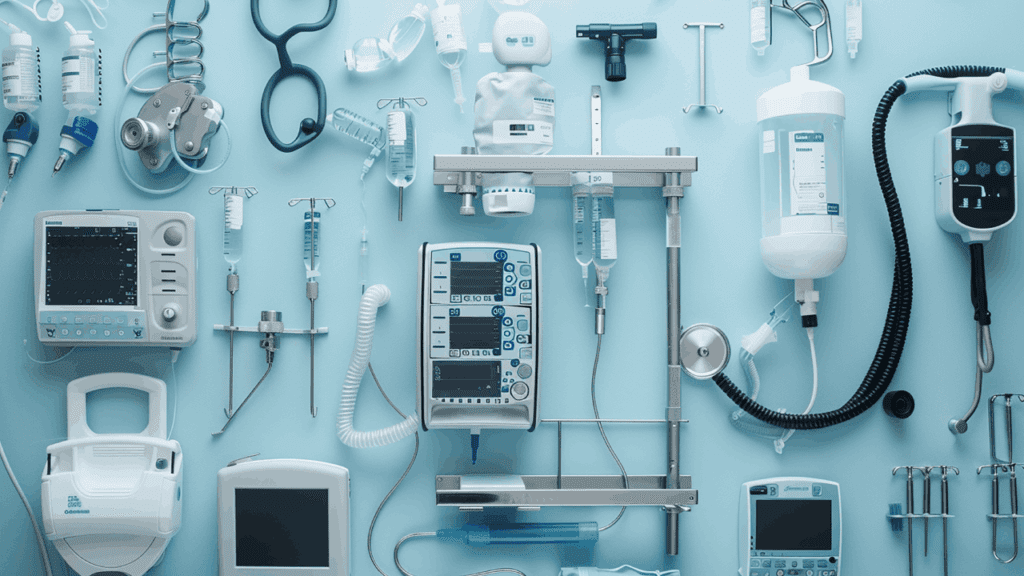
Hospitals play a critical role in maintaining public health and saving lives, and the availability of proper medical equipment is crucial to their effectiveness. From emergency care to routine check-ups, hospitals rely on a wide range of devices and instruments to diagnose, monitor, and treat patients efficiently. Having essential medical equipment ensures that hospitals can deliver high-quality care while maintaining patient safety. In this article, we will explore five key medical equipment items that every hospital should have to operate effectively.
Patient Monitors
Patient monitors are indispensable in any hospital setting. They provide continuous observation of a patient’s vital signs, including heart rate, blood pressure, respiratory rate, and oxygen saturation. Modern patient monitors often come with alarms and integration capabilities, allowing healthcare professionals to respond promptly to any critical changes in a patient’s condition.
These devices are particularly vital in intensive care units (ICUs), emergency rooms, and post-operative recovery wards. A reliable patient monitor not only enhances patient safety but also allows medical staff to make informed decisions quickly. Without proper monitoring equipment, hospitals risk delays in detecting complications, which can be life-threatening. Investing in state-of-the-art patient monitors is a non-negotiable requirement for hospitals aiming for excellence in patient care.
Defibrillators
Defibrillators are life-saving medical equipment designed to deliver an electric shock to the heart in cases of cardiac arrest. This intervention can restore a normal heartbeat in patients experiencing severe arrhythmias or heart attacks. Automated external defibrillators (AEDs) are especially user-friendly, enabling even trained non-medical personnel to assist in emergencies.
Hospitals must equip key areas such as emergency rooms, ICUs, and surgical theaters with defibrillators. The ability to provide immediate cardiac intervention drastically increases survival rates. Additionally, defibrillators are portable, allowing them to be used during patient transport or in remote areas of the hospital where cardiac emergencies might occur. By including defibrillators in their core inventory, hospitals ensure they are prepared to respond to one of the most critical medical emergencies efficiently.
Ventilators
Ventilators are essential for patients who are unable to breathe independently or require assistance to maintain adequate oxygen levels. They are crucial in intensive care, surgery, and respiratory care units. Ventilators help manage severe respiratory illnesses, trauma cases, and complications from anesthesia during surgery.
Modern ventilators offer advanced features such as customizable breathing cycles, pressure support, and oxygen delivery control. They are particularly vital during outbreaks of respiratory illnesses or pandemics when a surge in patients requiring respiratory support can occur. Having sufficient ventilators in a hospital’s inventory ensures that critically ill patients receive the support they need, potentially saving countless lives.
Ultrasound Machines
Ultrasound machines are versatile medical equipment used for diagnostic imaging. They employ high-frequency sound waves to create images of internal organs, blood vessels, and tissues. Ultrasound is widely used in obstetrics, cardiology, and emergency medicine, making it an indispensable tool for accurate and non-invasive diagnosis.
These machines assist healthcare professionals in detecting abnormalities, guiding procedures, and monitoring treatment progress. Modern ultrasound devices are portable, allowing for bedside examinations, which is particularly beneficial in emergency situations. Investing in high-quality ultrasound machines allows hospitals to enhance diagnostic accuracy, reduce invasive procedures, and improve overall patient care efficiency.
Infusion Pumps
Infusion pumps are medical equipment used to deliver fluids, medications, and nutrients directly into a patient’s bloodstream in controlled amounts. They are widely used in ICUs, surgical wards, and for patients requiring long-term medication administration. Infusion pumps offer precise dosing, which is critical for medications with narrow therapeutic windows or for delivering chemotherapy, antibiotics, and pain management drugs.
These devices improve patient safety by minimizing the risk of human error in medication administration. They also enhance workflow efficiency, allowing healthcare professionals to focus on patient monitoring and other critical tasks. Hospitals equipped with advanced infusion pumps can ensure consistent and safe delivery of medications, contributing to better patient outcomes.
Conclusion
Medical equipment forms the backbone of effective healthcare delivery. Hospitals that invest in essential equipment such as patient monitors, defibrillators, ventilators, ultrasound machines, and infusion pumps are better equipped to provide timely, accurate, and life-saving care. Each of these devices plays a crucial role in diagnosing, monitoring, and treating patients, ensuring safety and efficiency in hospital operations.
By prioritizing the acquisition and maintenance of key medical equipment, hospitals not only improve patient outcomes but also enhance the overall quality of healthcare services. In today’s rapidly advancing medical landscape, having reliable and modern equipment is not just a necessity; it is a commitment to patient safety and medical excellence.
Every hospital, regardless of size or specialty, should carefully evaluate its inventory of medical equipment, ensuring it meets both current and anticipated patient care needs. From emergencies to routine treatments, the right equipment can make a significant difference in saving lives and improving the standard of care.