
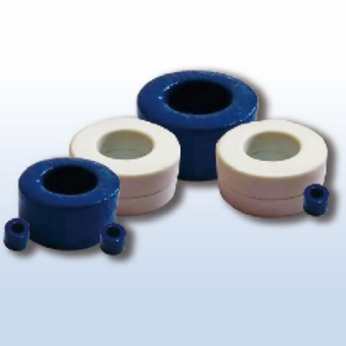
Accurate current measurement is fundamental in modern electrical systems, whether it’s for industrial automation, smart grids, or precision laboratory equipment. Ensuring that current transformers deliver precise readings is not just a matter of convenience—it is critical for system efficiency, safety, and reliability. One key component that enables this level of precision is the nano-crystal ring core for high-accuracy current transformers. This article explores why these advanced materials have become indispensable for accurate current measurement.
Understanding Current Transformers and Their Importance
Current transformers (CTs) are devices designed to measure alternating current (AC) by producing a reduced, proportional current for metering and protective relay purposes. They provide isolation between the high-voltage power circuit and measuring instruments, which is essential for both safety and the integrity of measurements. The accuracy of a CT largely depends on its magnetic core material, which directly influences the transformer’s ability to replicate primary current in a controlled and linear manner.
Traditionally, current transformers used materials such as silicon steel or amorphous alloys. While effective for general applications, these materials present limitations when high precision is required, especially at low currents or in environments with fluctuating loads. This is where nano-crystal ring cores for high-accuracy current transformers demonstrate a significant advantage.
What Makes Nano-Crystal Ring Cores Unique
Nano-crystal materials are a class of soft magnetic materials characterized by an ultra-fine crystalline structure at the nanometer scale. These materials exhibit superior magnetic properties, including high permeability, low coercivity, and minimal core losses. When fabricated into a ring core for a current transformer, nano-crystals allow for exceptionally efficient magnetic flux conduction, resulting in several critical benefits:
- High Magnetic Permeability: The ability to channel magnetic flux efficiently reduces errors in current measurement, particularly at low currents. This ensures the CT can accurately detect small variations in primary current that other materials might miss.
- Low Hysteresis Loss: Nano-crystal cores have minimal energy loss during magnetization cycles. Reduced hysteresis loss directly improves the fidelity of current reproduction in the secondary circuit, crucial for precision metering.
- Thermal Stability: Temperature fluctuations often lead to drift in measurements. Nano-crystal ring cores maintain stable magnetic properties across a wide temperature range, enhancing reliability in demanding industrial environments.
- Compact Design: High permeability allows for smaller core dimensions without sacrificing performance. This compactness enables modern high-accuracy CTs to be more space-efficient while maintaining superior measurement quality.
Enhancing Measurement Accuracy in Critical Applications
Accurate current measurement is not merely a technical luxury—it has practical implications across various industries. In power distribution systems, even minor errors can lead to incorrect billing, energy losses, or undetected faults. High-accuracy CTs equipped with nano-crystal ring cores address these challenges by offering precise current sensing over a wide range of operating conditions.
For instance, in smart grids, the ability to detect small deviations in current flow can help optimize energy distribution and detect equipment anomalies before they escalate into costly failures. Similarly, in industrial automation, precise current measurements are essential for monitoring motor loads, protecting sensitive electronic devices, and ensuring overall process efficiency.
Reducing Measurement Errors
Measurement errors in current transformers typically fall into two categories: phase errors and ratio errors. Both can be mitigated by employing nano-crystal ring cores:
- Phase Error Reduction: Phase error arises when the secondary current does not perfectly follow the primary current in phase, leading to inaccurate power calculations. The high permeability and low hysteresis of nano-crystal materials minimize this discrepancy.
- Ratio Error Minimization: Ratio errors occur when the transformation ratio deviates from its nominal value. Nano-crystal cores, due to their linear magnetic properties, maintain consistent performance even under varying load conditions, ensuring minimal ratio errors.
By reducing these errors, nano-crystal cores help achieve the stringent accuracy classes required in metering and protective applications.
Comparisons with Traditional Core Materials
While traditional silicon steel cores are cost-effective and widely used, they suffer from higher core losses, lower permeability, and greater susceptibility to temperature-induced drift. Amorphous cores perform better than silicon steel, especially at high frequencies, but they still cannot match the performance of nano-crystal cores in terms of low-current detection and compact size.
Nano-crystal cores combine the best features of existing materials: they offer superior magnetic performance, thermal stability, and mechanical robustness. This makes them particularly suitable for high-accuracy current transformers in demanding applications where precision is non-negotiable.
Integration into Modern Current Transformers
Integrating nano-crystal ring cores for high-accuracy current transformers requires careful design and manufacturing. The core must be precisely annealed to achieve the desired crystalline structure, and winding techniques must minimize leakage flux and parasitic inductances. Modern CT designs often include additional features such as epoxy encapsulation for mechanical stability and insulation, ensuring the transformer remains reliable under harsh operating conditions.
Moreover, these cores allow for innovative designs such as split-core or toroidal CTs, which offer flexibility for retrofitting in existing systems without compromising measurement accuracy.
Future Trends in High-Accuracy Current Measurement
The demand for high-accuracy current measurement is growing, driven by the rise of smart grids, renewable energy integration, and advanced industrial automation. Nano-crystal technology is poised to play a pivotal role in this evolution. Research continues to improve material properties, reduce manufacturing costs, and develop compact, high-performance CTs suitable for diverse applications.
In addition, hybrid approaches combining nano-crystal cores with digital signal processing and IoT-enabled monitoring are emerging. These systems leverage the inherent precision of the nano-crystal core and enhance it with real-time data analytics, creating a new standard for intelligent energy management.
Conclusion
The importance of precise current measurement cannot be overstated. Accurate readings are essential for safety, efficiency, and the economic operation of electrical systems. Nano-crystal ring cores for high-accuracy current transformers have revolutionized this field by offering unparalleled magnetic performance, thermal stability, and compact design. Their ability to minimize phase and ratio errors, reduce core losses, and maintain precision under varying conditions makes them indispensable in modern metering and protective applications. As technology advances and the demand for high-accuracy measurements grows, nano-crystal cores will continue to be at the forefront of innovation, ensuring that current transformers deliver the reliability and precision that today’s electrical systems demand.